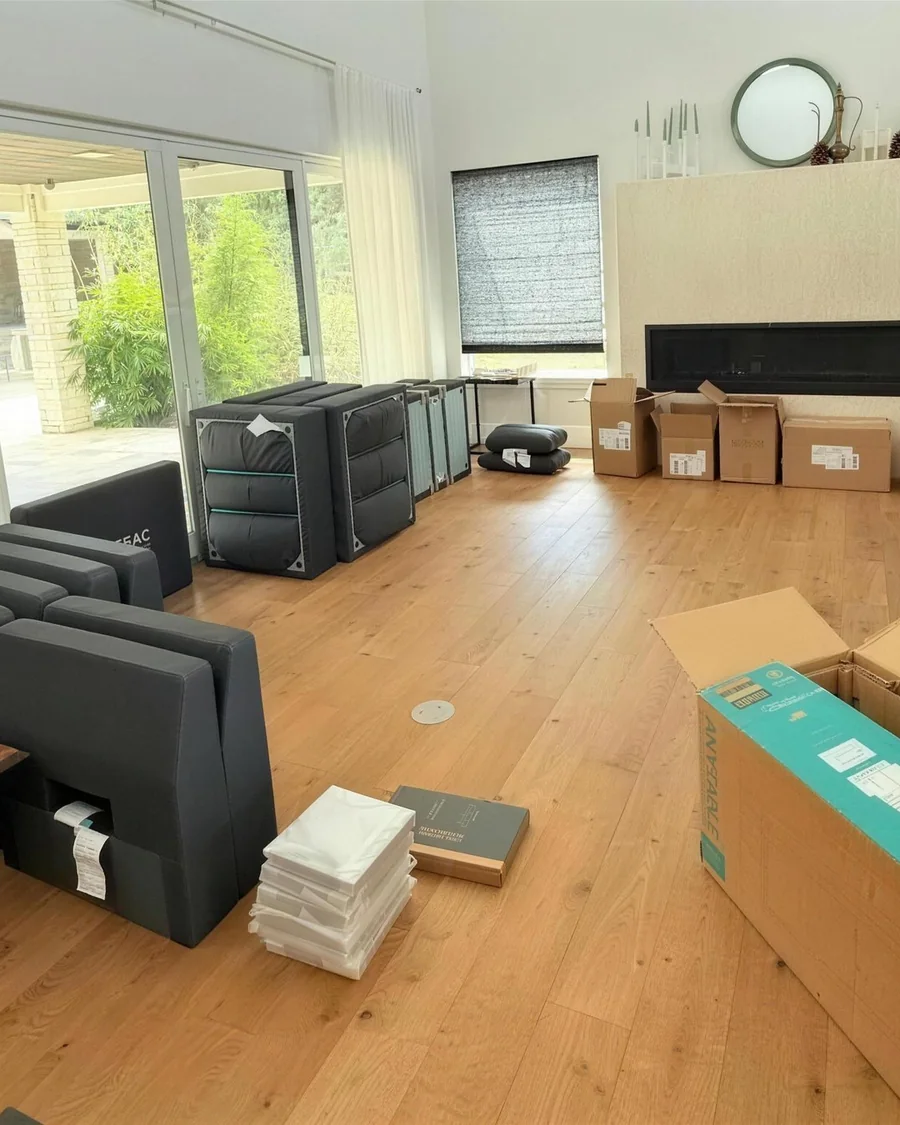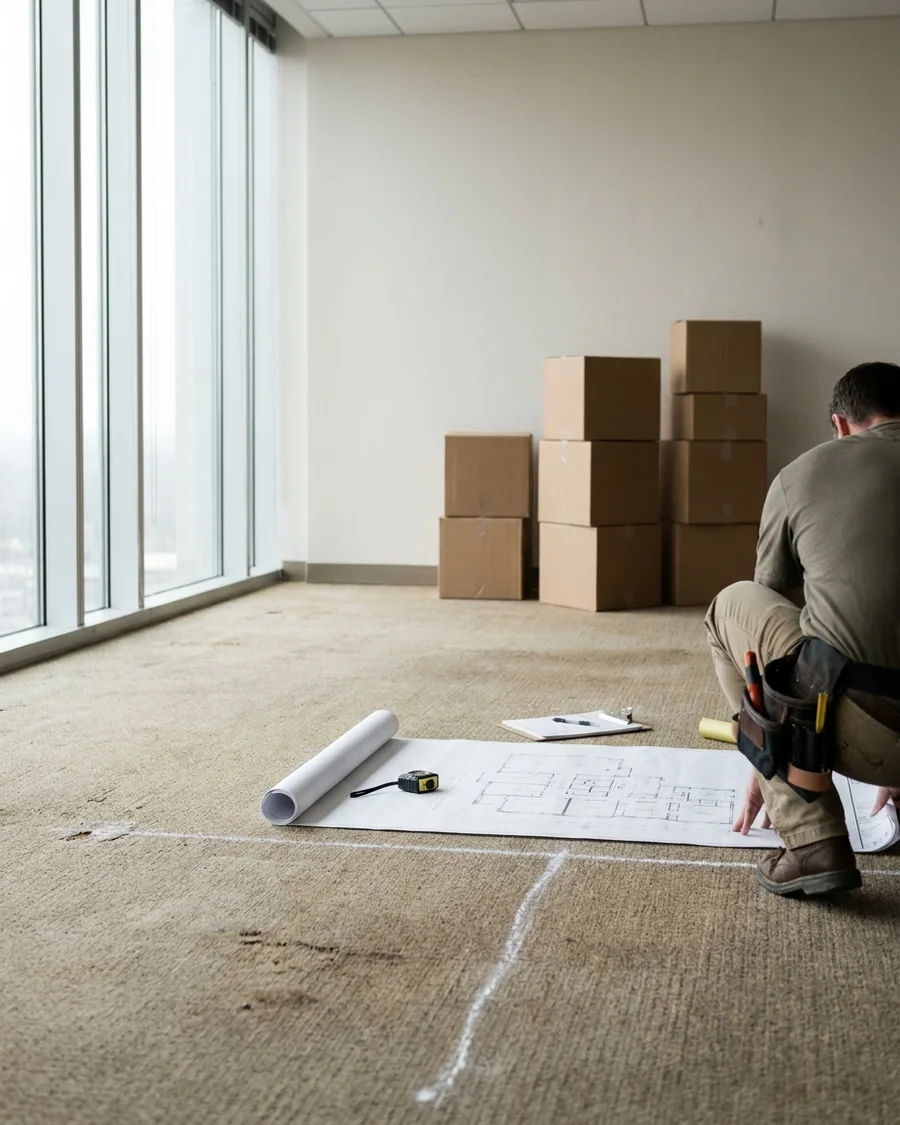
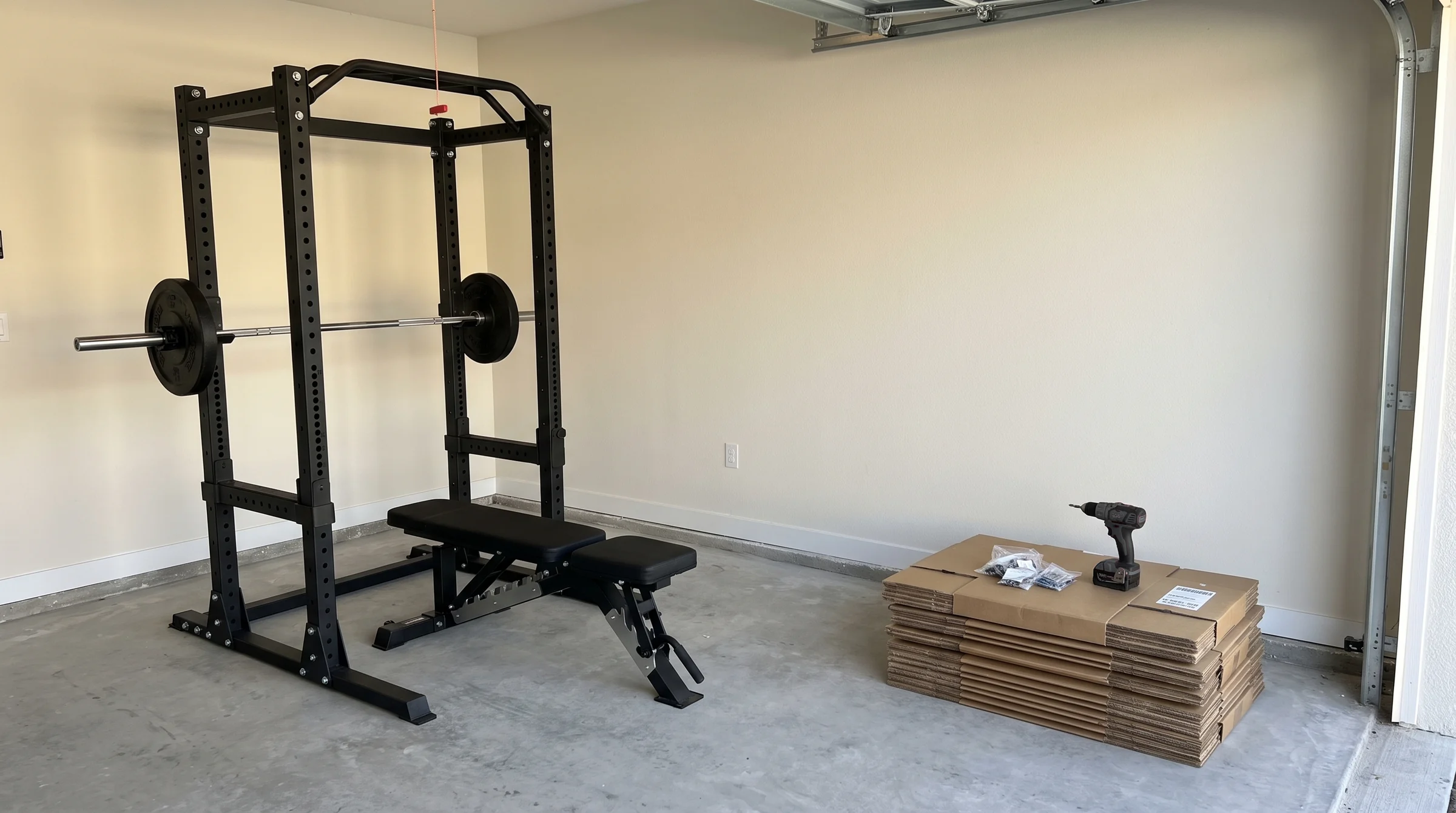
Why is a treadmill assembled in the room where it will be used?
A treadmill is assembled in the room where it will be used because, once built, it is heavy and often will not fit through a door. The cartons fit where the finished machine does not, so the frame, the deck and the console are put together in the manufacturer's order, in the room the treadmill is going to live in.
The same goes for squat racks, power racks and the rest of a home gym, which is why exercise equipment assembly happens where the equipment will stand. A rack built in the garage and then walked toward the spare room is a rack that comes apart again in the hallway.
Building in place has a second advantage: the equipment is leveled on the floor it will actually be used on. That floor, not the one it happened to be built on, decides whether a treadmill runs true and a rack sits still.
Will a treadmill fit through the door and up the stairs?
An assembled treadmill often will not, which is why only the cartons make the trip and the machine is built at the top of the stairs, not the bottom. Check the route against the largest carton before delivery day.
Walk the route from the door the carrier will use to the spot where the machine will stand. The front door is rarely the problem. The turn at the top of the stairs is, and so is a doorway off a narrow hallway, where a long carton has to pivot rather than slide straight in.
Measure the tightest point on the route against the largest carton, or against the box sizes if the manufacturer lists them. Count the turns as well as the doorways, and look at the ceiling over the stairs, because a long carton tips as it climbs.
If the equipment came on a threshold delivery, the cartons stop just inside the entrance, often in the garage, and the carry to the room is still ahead. The delivery levels are explained in what to check before you sign for a delivery. Tell us about stairs, a tight landing or a long carry at booking, so the crew plans it.
Can a home gym go in an upstairs room?
Yes, if the room and its floor suit it: the cartons go up the stairs, and the equipment is built where it will stand. The parts are laid out in the space there is, so the floor of that room needs to be clear.
The room has to suit the machine as well as the route. The manual sets out the space the equipment needs around it, and on a treadmill the space behind the deck is the part people forget. A rack with a pull-up bar needs the ceiling height its manual calls for, and a treadmill needs headroom for whoever is standing on the deck.
Choose the room with the manual open, not after the cartons are upstairs. Anything the floor needs beyond leveling, such as a platform, has to be in place before the build, because building platforms is outside the service.
Can you set up a home gym in a garage?
Yes, and the floor is the part to plan for: garage floors are laid with a fall toward the door, so a rack or a treadmill set on one is rarely level as it stands.
The equipment is leveled on that slope with the feet and adjusters it came with. What we do not do is build platforms or cut custom shims to take up a bigger fall, because custom building and cutting are outside the service.
Garages tend to hold the rest of the move as well. Clear the bay where the equipment will stand, plus room around it to lay out the parts, and keep an existing outlet within reach of the treadmill. Decide where the packaging goes too, because gym equipment brings a lot of it.
How do you level a treadmill or a rack on a floor that is not flat?
A treadmill or a rack is leveled with the feet and adjusters it came with, each one set to the floor under it rather than wound out evenly. Floors here are rarely flat, so the feet are set to the floor, not the piece.
That is what keeps a rack from rocking under load and a treadmill running true. On a rack, the uprights are set plumb and the base leveled, so the hooks and the safeties sit at matching heights on both sides.
If a mat is going under the equipment, lay it before the build. The machine is leveled on whatever it stands on, and lifting a finished treadmill to slide a mat under it is the carry you were trying to avoid.
Does a treadmill need an outlet nearby?
Yes. A treadmill needs an existing outlet within reach of where it will stand, and that outlet has to be in place before the crew arrives, because Masterwork Assembly does not do electrical work.
Once it is built and leveled, the treadmill is plugged into that outlet so you can see it run before we leave. New outlets, moved outlets and any wiring in the wall are for your electrician, and the manual sets out the power the machine needs, which is worth showing them before delivery day.
Decide the spot with the outlet in mind. A treadmill placed where its cord does not reach is a treadmill that gets moved again.
How is a squat rack or home gym put together?
A squat rack or home gym is put together in the manufacturer's order, with every bolt and bracket counted against the parts list before anything is joined. Racks are squared and bolted together as the kit specifies, and every adjustment is checked in front of you before we leave.
Where the kit provides for anchoring, tell us at booking so it is part of the plan. A multi-station home gym goes together the same way, in the manual's sequence, with every cable counted along with the rest of the parts.
If a part is short, we tell you immediately, and the shortage goes into a written inspection report along with any pre-existing damage. We help identify the exact part and guide you on getting the replacement from the manufacturer, and the manual and the order details make that request quicker.
What should you clear before the equipment is built?
Clear the spot where the equipment will stand, room around it to lay out the parts, and the route from the door. Have the cartons in that room or near it, with the hardware bags kept together.
- The spot itself, with the clearance the manual asks for around the machine.
- Floor space beside it for the frame, the deck and the parts to be laid out.
- The route: furniture out of the hallway, rugs off the stairs, doors fully open.
- Any mat already down where the machine will stand.
- An existing outlet within reach, if the equipment plugs in.
- The hardware bags, the manual and the order details, kept with the cartons.
- A place for the packaging, such as one side of the garage.
We bring all professional tools; the hardware from the boxes is the one thing that has to be there. The packaging is broken down and stacked wherever you want it, and full haul-away is a paid add-on. The checklist for any assembly visit, gym or not, is in what to have ready before the assembler arrives.
Common questions
Can a treadmill be assembled the day it is delivered?
Often, yes. Same-day and next-day availability is genuine, depending on what is already on the board, so send the delivery date as soon as you have it and tell us if the carrier moves the window. If the cartons will be left in the garage or at the door, say so at booking, along with any stairs between there and the room. The crew then plans the carry and the build together, and the treadmill is leveled and run before we leave.
Can you move an assembled treadmill to another room?
Yes, inside the same home. If the treadmill will not make the route in one piece, it is taken apart, carried to the new room and built again in the manufacturer's order, with every part counted before it goes back together. It is then leveled to the new floor, with the feet set to that floor rather than the old one, and plugged into an existing outlet so you can see it run. Tell us at booking where it is going.
Can a treadmill, a rack and the rest of a home gym be built in one visit?
Usually, yes. Tell us everything that is arriving at booking, so the visit is planned around all of it and the crew is sized to the job. Each piece is built in its own manufacturer's order, counted against its own parts list and leveled where it will stand. A cabin sauna arriving with the gym can be part of the same visit: it is built in the room the same way, and its heater hookup is left for your electrician.
What happens to the packaging from gym equipment?
It is broken down and stacked wherever you want it, as standard. Treadmills and racks arrive with long cartons, foam blocks, plastic film and corner protectors, and a whole home gym's worth of it can fill one side of a garage. Full haul-away is a paid add-on if you would rather none of it stays.