Why a unit turnover is a scheduling problem before it is a furniture problem
A unit turnover is a scheduling problem before it is a furniture problem because the furniture hours barely move while the days the unit stands open do, and a vacant unit is unavailable revenue for every one of them. The furniture itself is normally a single visit. The gap around it is where turns are won and lost.
Build the turn backwards from the date you want the unit listed or occupied. Paint and flooring have to cure and clean has to happen after the dust, which means the furniture slot is one of the last fixed points in the sequence and one of the easiest to misplace. A crew that can only come on Thursday costs you Tuesday and Wednesday no matter how fast it works once it arrives.
The second thing that moves a turn is the delivery, not the assembly. Cartons that land on the dock the morning of the build are a different day from cartons already stacked in the unit, and a building that limits the service lift to a two hour window turns one into the other.
What should a property manager check during a unit turnover?
A property manager should check five things on furniture that stays between residents, in this order: the joints, whether the frame is still square, the drawer runners, the levelling feet and the anchors. Four of them are quiet failures that cost you a callback. The fifth is the one that is dangerous.
- Cam fittings and bolts. Take the handle of every door and the front of every drawer and move it gently side to side. Play at the corner means the cam lock has worked loose in its hole, and a joint that is loose today is a joint that elongates its own hole over the next tenancy.
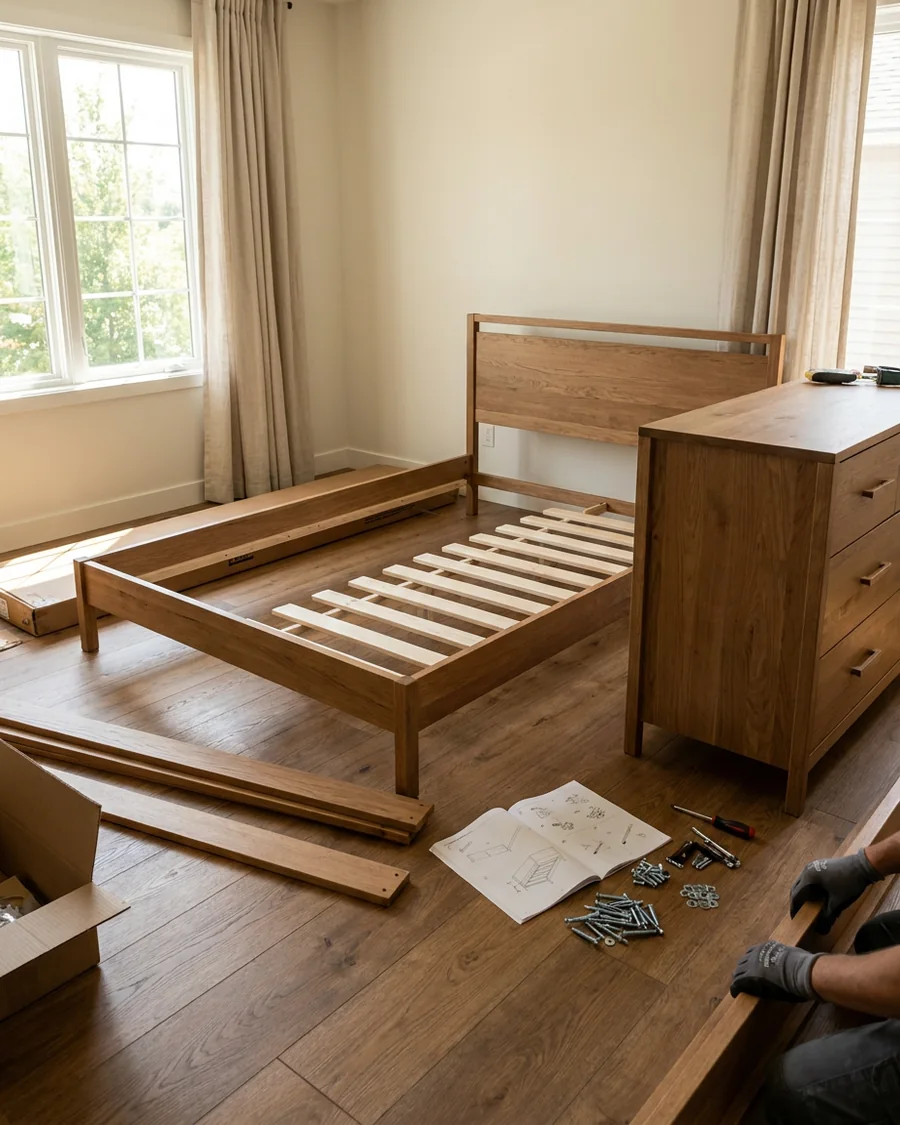
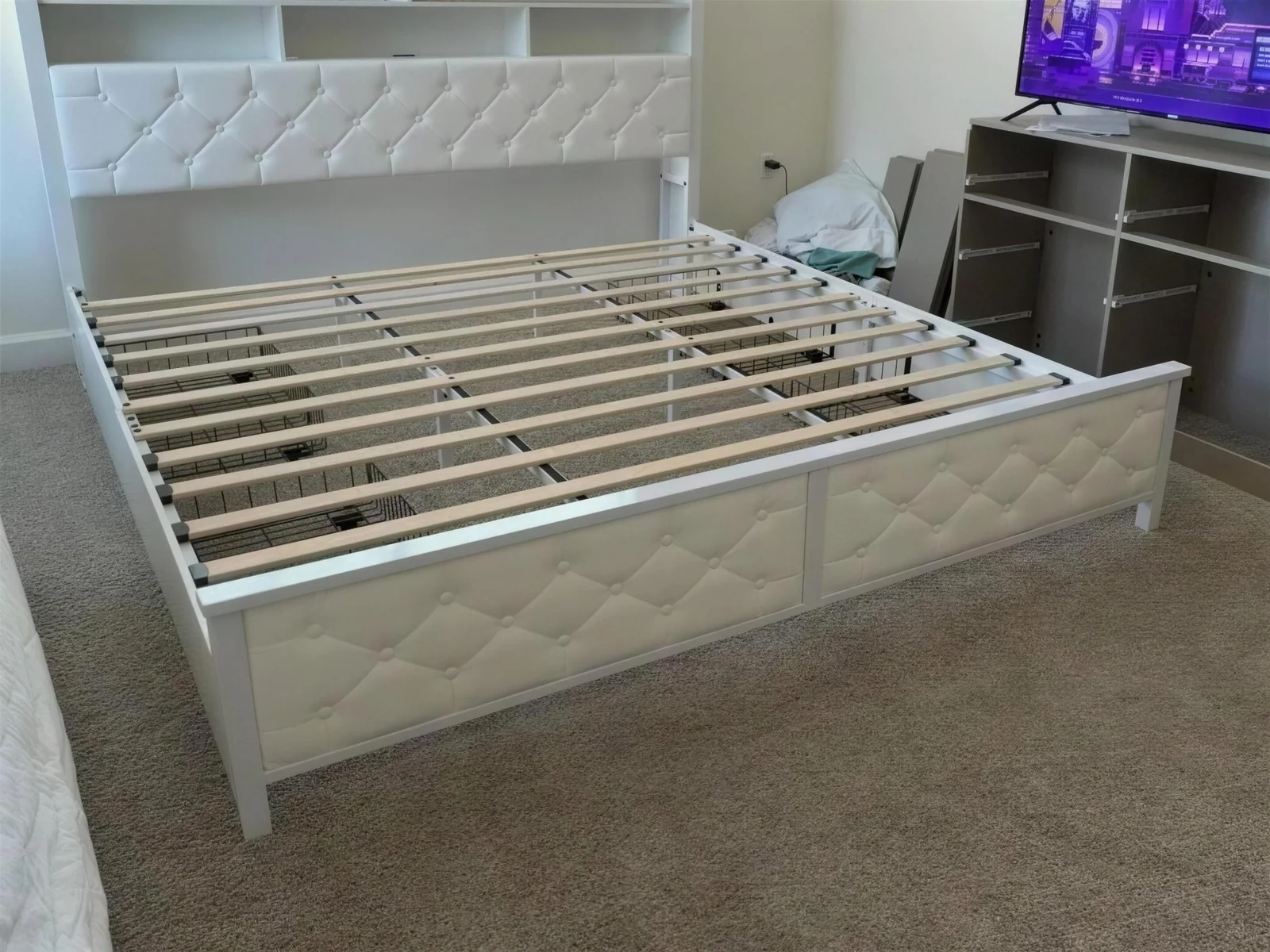
- Frame square. A bed frame that has been dragged rather than lifted goes out of square at the corners, and the first sign is usually the slats sitting unevenly or a rail that has started to climb out of its bracket. Check the diagonal by eye against the wall line, not by looking at the frame on its own.
- Drawer runners. Pull every drawer fully out and push it back. Grit in a runner, a runner that has come off its clip at the back, or a drawer that drops at the last inch is the complaint that gets logged in the first weeks of the new lease.
- Levelling feet. Set the feet to the floor rather than winding them out evenly and hoping, because floors in Central Texas are rarely flat and a piece that rocks is usually the floor talking.
- Anchors. Confirm every tall piece is still strapped, and that the strap is holding something rather than just being present in the room.
Write down what you find while you are standing in the room. A note against a unit number is what turns a vague sense that the dresser felt loose into something a supplier or an installer can act on before the next resident moves in.
The failures that show up on the second and third turn
The failures that show up on the second and third turn are loose cam fittings, bed frames dragged out of square, grit in drawer runners, levelling feet wound to the end of their thread and shelf-pin holes opened out by repeated moves. Almost nothing fails on the first turn, because those failures are cumulative: every move, every drag across a floor and every fixing that was over-tightened once loads the same few joints again.
Cam fittings are the clearest example. The panel compresses slightly around the cam every time the joint is stressed, so the fitting that felt tight at handover has a little play by the second turn and a visible gap at the corner by the third. An empty unit is the cheapest moment to find it, and once the case has started to rack the piece is usually past the point where tightening anything helps.
Know where the line sits, because it changes what you decide to do next. Hardware that has only worked loose is a different problem from board that has failed. A cracked panel or a hole that has stripped out in the board itself is a replacement part ordered from the manufacturer: we do not repair furniture, and a panel that has failed is not something to patch and hand to the next resident.
Anchoring, and why anything tall in a rented unit is a liability question
Anything tall enough to tip over, a dresser, a bookcase, a wardrobe, a television, should be anchored in a unit you do not live in, because the person standing in front of it is not the person who decided whether to anchor it, which makes it a liability question before it is a furniture one.
Manufacturers ship the strap in the box, and the strap is the single part most often left in the bag. The anchor also has to land in a stud, or in the correct fixing for that wall, because drywall on its own will not hold a loaded dresser that is already moving. Find the stud rather than trusting the first thing the detector beeps at.
At turnover, check the strap rather than assume it. The common states are a strap that was removed when the last resident moved the piece, a strap screwed back into the hole it already pulled out of, and a strap fitted at full extension so the piece can still travel. All three read as anchored from the doorway.
Anchoring and TV mounting both have to be arranged in advance rather than raised on the day, because they change the tools on the van and the time the job takes. Anything electrical is not ours: new outlets, hard wiring and anything behind a faceplate goes to an electrician.
What to standardise so a turn repeats instead of being rebuilt each time
Standardise the model and not just the look, because one bed, one dresser, one nightstand and one finish per unit type means every turn is the same build, the same part count and the same hour, scheduled and stocked once instead of investigated every time.
Mixed inventory is what makes a portfolio expensive to turn. A floor of two-bedroom units furnished with a different bed frame in each is a bespoke job every time, because nobody can pre-count the parts, pre-stage the spares or tell you on the phone how long the next one takes.
Keep three things in the unit file.
- Part numbers. The model and the manufacturer part numbers for each piece, so a replacement is a reorder rather than an investigation.
- A small stock of the hardware that disappears. Anchor straps, levelling feet, shelf pins and slat holders are the parts that never survive a move intact.
- One photograph of the finished layout. It is the cheapest of the three and it settles most placement questions before they are asked.
The payoff is that a turn becomes a booking rather than a conversation. An item count and a unit type is enough to schedule against, which is also what makes a short-notice turn possible at all.
Model units and amenity spaces are photographed, not just finished
A model unit and an amenity space are photographed rather than only lived in, and a camera is far less forgiving than a resident, so both are finished to a tighter standard: cables run out of sight, handles aligned across a run, legs square to the rug and the wall, and every label, sticker and protective film removed.
In a wide shot the eye reads the line between pieces rather than any one piece, so a run of units along a wall shows every millimetre of drift. The same is true of a bed that is a degree off the wall and a lamp cable crossing a rug. Those are the frames that get used in the lease-up for a year.
Leave a gap between the install and the photographer rather than booking them into the same hour. Styling, steaming linen and moving one thing six inches is real time, and it is time nobody has while a crew is still carrying cartons through the door.
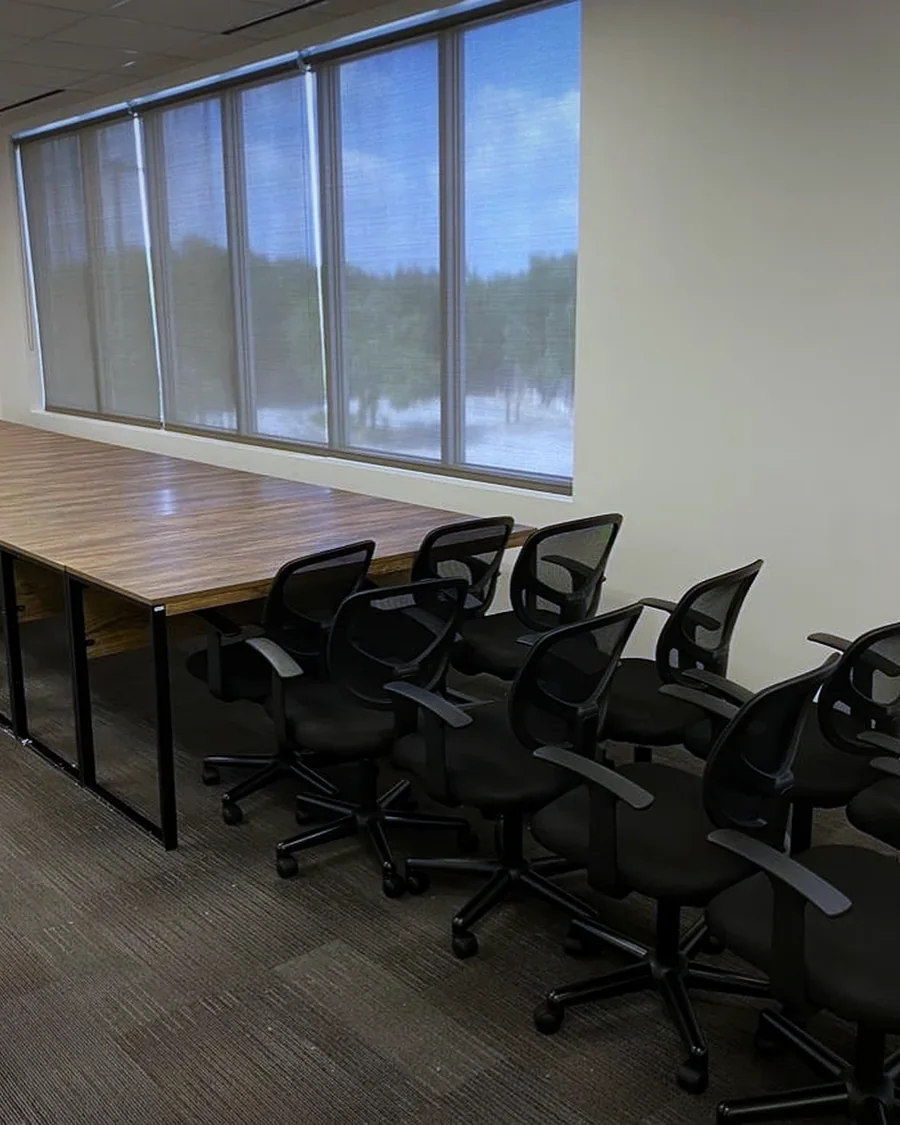
Amenity spaces take heavier use than any apartment: coworking benching, lounge seating, package rooms, fitness equipment in a room nobody supervises. Those get anchored, and they are worth putting on your own check schedule rather than looking at them only at handover, because they are being used by everyone in the building at once.
What same-day and next-day availability changes on a turnover calendar
Same-day and next-day availability changes a turnover calendar by making the furniture slot the one part of a turn that can still be moved late, so a resident giving short notice does not have to cost you the rest of the week. We answer and schedule from 8am to 8pm, Monday to Sunday, and when it is urgent a call to (512) 333-8525 gets a straighter answer than a form.
It changes the calendar in a second way that matters more over a year. You can hold the furniture until the unit is genuinely clean and dry, instead of booking a date three weeks out and either sitting idle or building around wet paint when the trades run late.
Two things decide whether today or tomorrow is realistic: the item count and the access. The count tells us how many people the job needs, and the access is everything a building can do to stop them, a service lift that has to be reserved, a dock window that closes at eleven, a gate code nobody has. Both are worth saying at booking rather than on the day.
Same-day and next-day availability is genuine. That is not a promise about your unit specifically, it is a description of how the board is kept, and it is the reason a turn calendar can absorb a surprise.
Where this work runs, and what is outside it
Unit turnover work runs across Austin and Central Texas, nineteen cities in all, and what sits outside it is furniture repair, custom cutting or building, and anything electrical. A portfolio can sit across several of those cities at once: downtown Austin, Round Rock, Pflugerville, Kyle and San Marcos.
The student calendar in San Marcos and a lease-up in Round Rock are the same problem in different clothes, a building that has to be ready on a date somebody else chose. Worth knowing before you book: we do not repair furniture, we do not cut or build custom pieces or materials, and we do not touch anything electrical. TV mounting and wall anchoring are done, arranged in advance. Cardboard is broken down and stacked wherever you want it left as standard, and full haul-away is a paid add-on set up at booking rather than sprung on the day.
Commercially insured. COI and W-9 available on request. Buildings that will not release a dock or a lift without paperwork should ask for it at booking, because that is the item that delays a turn while everything else is ready.
If you run turns on a calendar, the useful conversation is the one before the calendar is set. Unit types, item counts and the access rules per building are enough to plan a year of turns against, and it is a far shorter call than the one that starts after a resident has already given notice.
Common questions
How long does a unit turnover take?
Masterwork Assembly normally turns a standard furnished unit in a single visit. The length is decided by the item count and the building access, not the square footage, so an item count given at booking is worth more than a description of the unit. Buildings with a reserved service lift or a fixed dock window should mention that at the same time.
Can you turn a unit on short notice?
Often, yes. Same-day and next-day availability is real and depends on what is already on the board that day, which is why a call to (512) 333-8525 gets a faster answer than a form when the date is tight. We answer and schedule from 8am to 8pm, Monday to Sunday.
Do you repair furniture that the last resident damaged?
No. We do not do repairs, custom cutting or building, or anything electrical. If a part is missing or damaged we tell you, help identify it and point you at the supplier for the replacement. A cracked panel or a stripped hole in the board is a part order, not something to patch and hand to the next resident.
What should a property manager check on furniture between residents?
Check the joints first, then whether the frame is still square, then the drawer runners, the levelling feet and the anchors. The first four are quiet failures that turn into a callback early in the new lease. The anchors are the safety item: confirm every tall piece is still strapped, and that the strap is holding something rather than just being present in the room.
What do you need to know to schedule a turn?
The item count, the unit type and the building access. The count sets how many people the job needs, and the access covers the service lift, the dock window and the gate code, which is what actually decides whether a date is realistic. Anything that has to be arranged in advance, such as wall anchoring or TV mounting, belongs in the same conversation.